A wafer butterfly valve is a butterfly valve with a compact, short-face body that is designed to be clamped between two pipe flanges. Unlike lug-type or double-flanged valves, the wafer valve has no threaded lugs or integral flanges of its own. Instead, the pipe flange bolts pass through alignment holes or slots in the valve body, centering and clamping the valve securely in place.
The wafer design is the most economical butterfly valve configuration and accounts for the majority of butterfly valves installed worldwide. Its simple construction, light weight, and low cost make it the default choice for isolation and throttling service in continuous pipeline systems.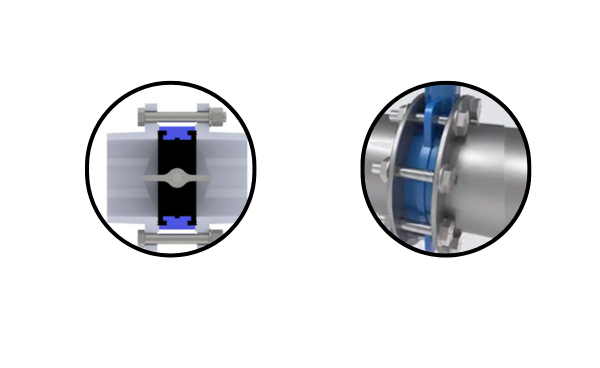
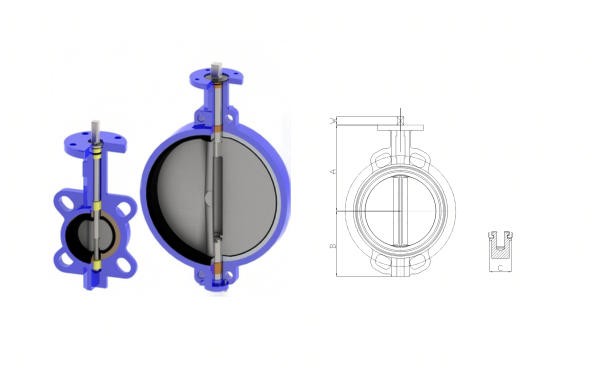
Wafer butterfly valves use resilient (elastomer) seats. Two common constructions:
Seat Material Selection Guide:
|
Seat Material |
Typical Applications |
Temperature Range |
|
EPDM |
Water Supply • Wastewater • HVAC • Municipal Water |
14°F to 230°F (-10°C to 110°C) |
|
NBR |
Oil & Gas • Fuel • Air Compressors • Hydraulic Systems |
14°F to 176°F (-10°C to 80°C) |
|
FKM(Viton®) |
Chemical Plants • Petrochemical • High Temperature Service |
5°F to 356°F (-15°C to 180°C) |
|
Silicone |
Food & Beverage • Pharmaceutical • Clean Air Systems |
14°F to 320°F (-10°C to 160°C) |
|
PTFE |
Chemical Processing • Acid Pipelines • Corrosive Media |
14°F to 356°F (-10°C to 180°C) |
|
Hapalon |
Chemical Industry • Chlorine Systems • Outdoor Service |
14°F to 176°F (-10°C to 80°C) |
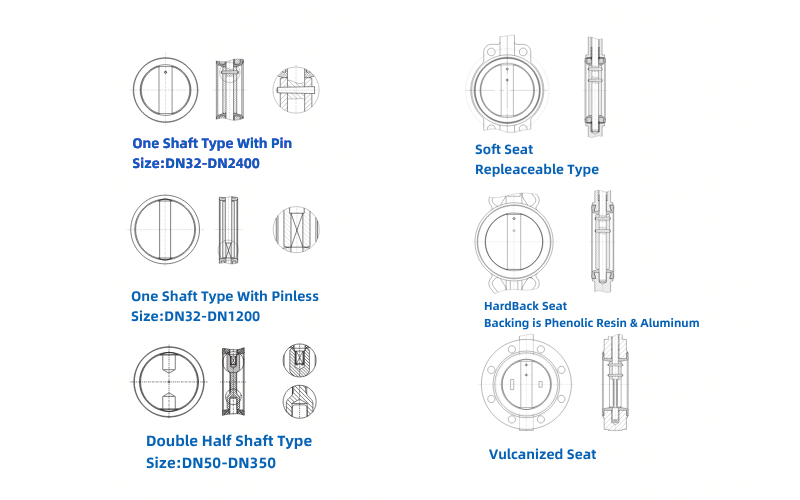
The wafer butterfly valve operates on a simple quarter-turn (90 deg) principle:
| Position | Disc Angle | Flow Condition |
| Closed | 0 deg (perpendicular) | Disc pressed against seat – bubble-tight shut-off |
| Throttling | 15 deg to 75 deg | Proportional flow control – equal-percentage characteristic |
| Fully Open | 90 deg (parallel) | Disc edge-on to flow – minimal pressure drop |
When closed, the disc is perpendicular to the pipe axis, compressing the disc edge against the resilient seat around the full 360 deg circumference. When the operator rotates the stem 90 degrees, the disc aligns parallel with the pipe wall, allowing fluid to pass with minimal obstruction.
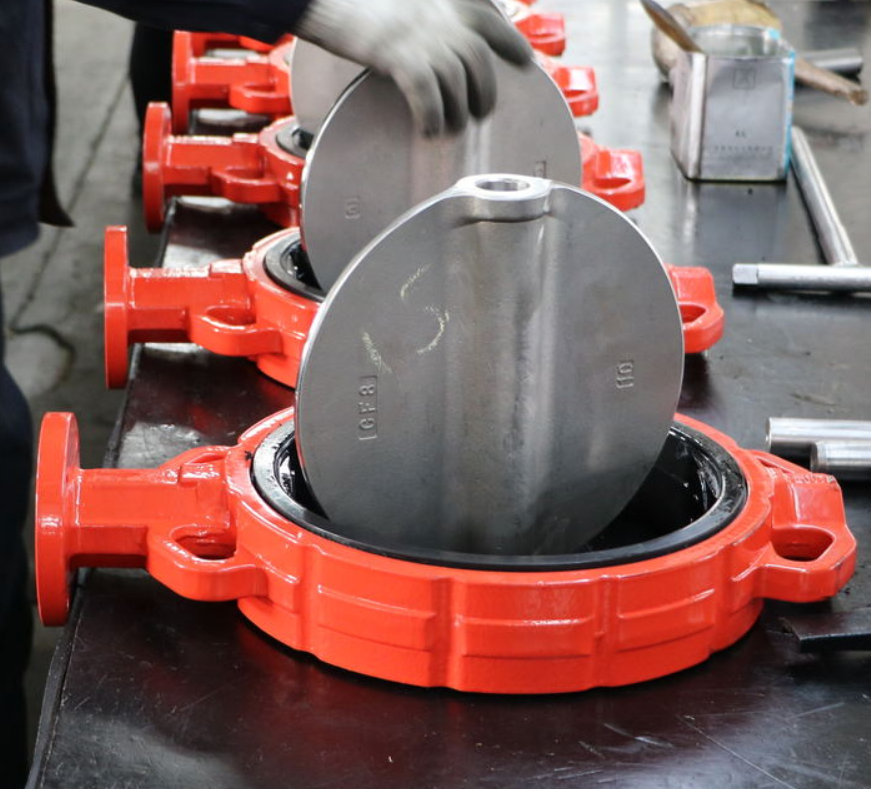
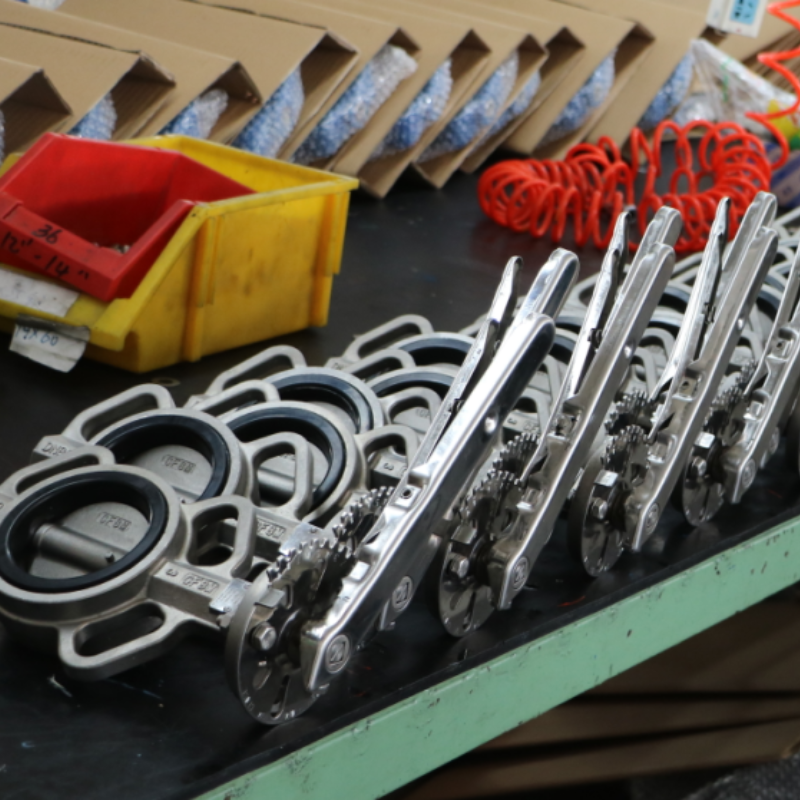
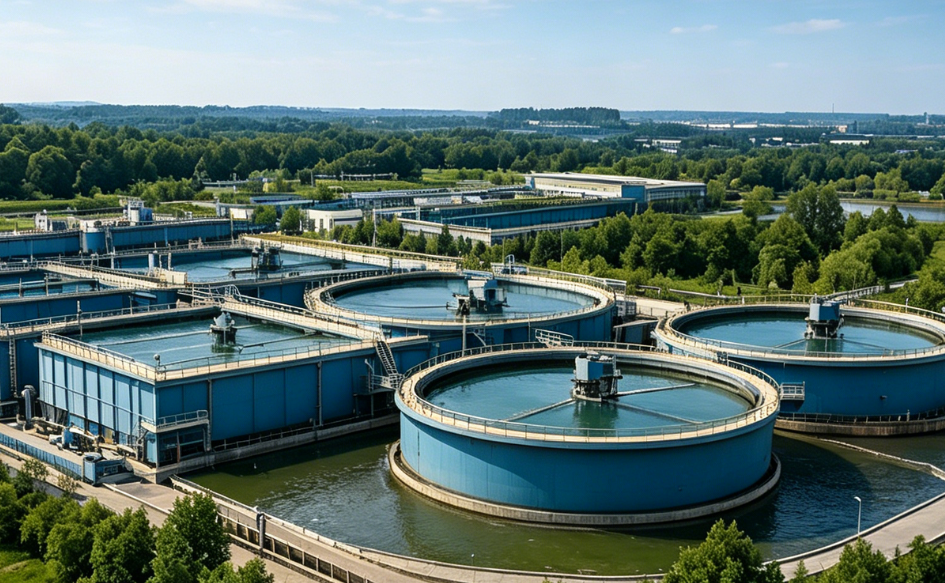
Filter bank isolation, chemical dosing lines, backwash piping, clearwell outlet control, and distribution main sectionalizing. Fusion-bonded epoxy coating and EPDM seat provide potable water compliance (NSF/ANSI 61 certified).
Chiller plant supply/return headers, cooling tower circuits, condenser water loops, and variable flow distribution. Lever-handled valves for quick manual isolation, actuated valves for BMS integration.
Sectional control valves in fire sprinkler systems and standpipe risers. UL/FM listed options available. Low pressure drop is advantageous in gravity-fed fire water systems.
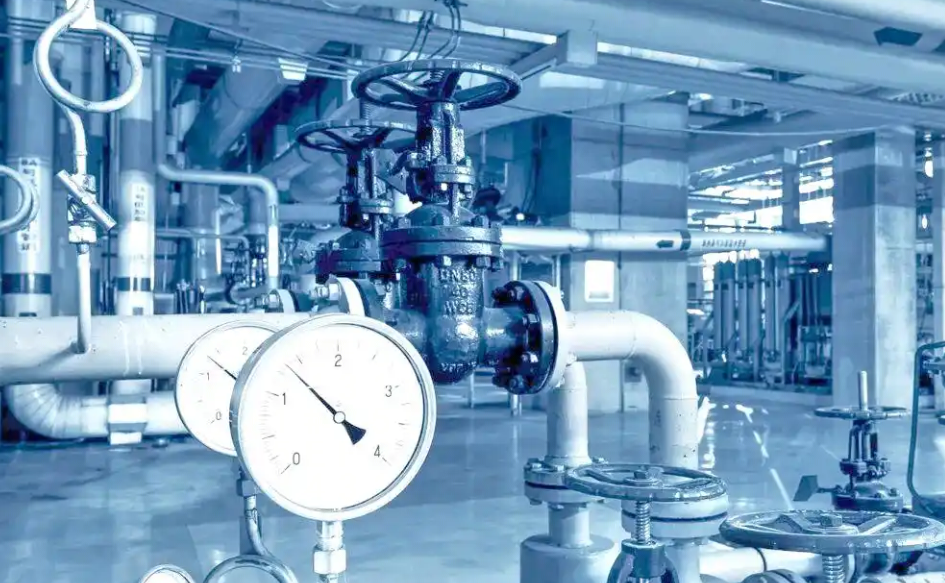
Cooling water supply and return, compressed air lines, low-pressure steam, process water make-up, and wash-down stations in manufacturing and industrial plants.
| Standard | Relevance to Wafer Valves |
| API 609 Category A | Concentric butterfly valves for industrial service |
| AWWA C504 | Rubber-seated butterfly valves for waterworks |
| EN 593 | European standard for all butterfly valve types |
| EN 558 Series 20 | Face-to-face dimensions for wafer valves (short) |
| ISO 5752 Series B | International face-to-face standard for wafer valves |
The table below summarizes key differences. See dedicated articles in this series for detailed guidance.
| Criteria | Wafer (This Article) | Lug (Part 2) | Double Flange |
| Cost | Lowest | +15-25% | +30-50% |
| Dead-End Service | Not suitable | Suitable | Suitable |
| Pipe Removal | Both sides unbolted | Downstream removable | Valve removable alone |
| Pressure | Class 150-300 | Class 150-300 | Class 150-600+ |
| Face-to-Face | Shortest | Short | Longest |
| Weight | Lightest | Moderate | Heaviest |
A wafer valve has through-holes for flange bolts and requires both flanges for clamping. A lug valve has threaded inserts on both body sides allowing independent bolting and dead-end service. See Part 2 of this series for a complete comparison.
No. Without a downstream flange, the valve body is not mechanically retained and can slide out under system pressure. For pipe-end or dead-end installations, specify a lug type butterfly valve.
Many wafer butterfly valves have integral elastomer sealing surfaces on both body faces that serve as flange gaskets. However, for higher pressure classes, worn flange faces, or certain flange finishes, separate gaskets may be recommended. Always follow the manufacturer's installation instructions.
Most common: ASME Class 150 (275 psi / 19 bar at 100 F / 38 C). Class 300 (720 psi / 49.6 bar) is available. European ratings: PN10 (10 bar / 145 psi), PN16 (16 bar / 232 psi), PN25 (25 bar / 363 psi).
Yes. Concentric resilient-seated wafer valves with vulcanized seats provide bubble-tight shut-off in both flow directions. No flow direction arrow is required during installation.
Commonly manufactured from 2 in (DN50) up to 48 in (DN1200). Above 48 in, double flange butterfly valves are more common due to higher structural loads and torque requirements.
Standard ISO 5211 mounting pad allows lever handles (2-12 in manually operated), gear operators (8-48 in or high torque), pneumatic actuators (double-acting or spring-return), and electric actuators (on-off or modulating with 4-20 mA feedback). All operators are factory-mounted and tested.
For pricing, technical datasheets, dimensional drawings, or engineering assistance selecting the right wafer butterfly valve for your project:
Email: sales@lauxvalve.com | Tel: +86 18920833829 | Website: www.lauxvalve.com


